

A blind rivet nut is a fastener designed for use in areas where access to the back of the material is not possible. It allows you to make a powerful threaded point in thin metal, plastic, or other panels without attaching a nut on the back side. This is often used in places where access is limited. Many industries use blind rivet nuts because they offer quick installation and secure fastening.
Understanding Blind Rivet Nuts
A blind rivet nut is a fastener designed to provide strong internal threads in materials that are too thin for tapping. Once it is installed, it creates a strong anchor upon which bolts or screws can be fixed externally. This makes blind rivet nut systems useful in production, repair, and assembly work where access is limited.
How a Blind Rivet Nut Works
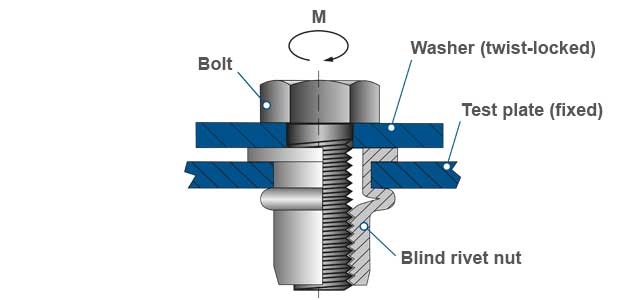
A blind rivet nut is placed into a pre-drilled hole. As the tool drags the nut, the body of the tool expands at the rear side and grips the material. This growth forms a tight hold in the form of a rivet, but with a threaded hole.
As they can be installed from one side only, blind rivet nut fasteners are widely used in enclosed, narrow, or hollow spaces. We provide the tools and type of nuts that provide easy installation and proper expansion.
Main Types of Blind Rivet Nuts
At MIS Tools, we help customers choose the right blind rivet nut depending on material type, grip range, and load needs.
Flat Head Blind Rivet Nuts: These provide a flush and clean surface. They are widely applied to the thin metal panels where a presentable appearance is required.
Countersunk Blind Rivet Nuts: These are embedded deeper in the material and are suitable where there is a need for a smooth and level surface.
Hex Body Blind Rivet Nuts: These have a shaped body so that they do not spin during installation. They are preferred in high-torque applications.
Open-End Blind Rivets: They are handy to use for general purposes and are capable of full interaction with two-headed bolts.
Main Types of Blind Rivet Nuts
At MIS Tools, we help customers choose the right blind rivet nut depending on material type, grip range, and load needs.
Flat Head Blind Rivet Nuts: These provide a flush and clean surface. They are widely applied to the thin metal panels where a presentable appearance is required.
Countersunk Blind Rivet Nuts: These are embedded deeper in the material and are suitable where there is a need for a smooth and level surface.
Hex Body Blind Rivet Nuts: These have a shaped body so that they do not spin during installation. They are preferred in high-torque applications.
Open-End Blind Rivets: They are handy to use for general purposes and are capable of full interaction with two-headed bolts.
FAQs
Q: What is a blind rivet nut used for?
A blind rivet nut creates strong threads in thin or hollow materials. It is mounted on one side, and the bolts can be screwed safely.
Q: How does a blind rivet nut hold the material?
The nut swells up when tugged by the tool and binds the rear side of the sheet. This growth forms a narrow and close band.
Q: Where are blind rivet nuts commonly applied?
They are applied in paneling, framing, cabinets, automobiles, and hollow structures. These nuts assist in making tough threaded points. We offer blind rivet nut solutions for different materials.
Q: What tools are needed to install a blind rivet nut?
A manual, battery, or pneumatic rivet nut tool is used. The nut is pulled with the aid of the tool to enlarge it. We assist the customer in choosing tools according to the volume of work and material.
Q: What is the difference between open- and closed-end blind rivets?
The open-ended ones can be fully bolted, and the closed-end ones close the backside against moisture. At MIS Tools, both alternatives are offered.
Q: How do I choose the right size blind rivet nut?
Match the nut to the material thickness, hole size, and load. Proper expansion leads to appropriate expansion. Our team helps customers select the correct blind rivet nut.
Q: Can blind rivet nuts be used in soft materials?
Yes, but perhaps more thickness of walls or special designs are required. Spinning or pulling out is avoided by the use of the right nut. We help customers pick suitable blind rivets for soft materials.
continue reading
Related Posts

Multigrip rivets are a simple, reliable way to join materials
A strong mechanism of fastening is necessary in case of

When it comes to choosing the right fastening solution, many